
Emergency and Fire Preparedness
When an alarm sounds, panic is your worst enemy; preparation is your best ally. Workplace fires and sudden emergencies unfold in seconds, leaving no time to figure out exit routes or debate who calls for help. This course equips employees with the essential knowledge to spot fire hazards before they ignite, react decisively to alarms, execute smooth evacuations, and know exactly when to use a fire extinguisher versus when to get out.
By: Safety LMS | Format: Online | Duration: 1 hour | Certification: 24 Months | Language: EnglishWhat you'll learn
-
Workplace Hazard Recognition: Identify common fire and emergency hazards, from faulty wiring and blocked electrical panels to improperly stored flammables.
-
Alarm Systems & Signals: Distinguish between facility alarm notifications, strobes, and emergency public address messages to react without hesitation.
-
Orderly Evacuation Protocols: Master safe egress practices, including door-check techniques, avoiding elevators, and moving through low-visibility environments.
-
Assembly & Accountability: Understand the life-saving importance of reporting immediately to designated muster stations to prevent unnecessary search-and-rescue attempts.
-
Fire Extinguisher Decision-Making: Determine whether a fire is in its incipient (early) stage and safe to fight, or if immediate evacuation is required.
-
Proactive Hazard Reporting: Learn how everyday reporting of blocked exits, missing extinguishers, or faulty emergency lights prevents disasters.
Description
During a real workplace emergency, confusion spreads faster than smoke. When an alarm triggers, hesitation often stems from not knowing the plan: which stairwell to take, where to assemble, or who is tracking accountability. This Emergency and Fire Preparedness course replaces uncertainty with clear, practiced action, ensuring every employee understands their role in keeping the workplace safe and resilient.
We start with prevention. You will learn to recognize the underlying conditions that lead to workplace emergencies, focusing on proper housekeeping, safe electrical practices, and chemical storage controls. The course then walks you through your facility’s Emergency Action Plan (EAP), teaching you how to read evacuation maps, locate manual pull stations, and identify secondary escape routes when primary paths are compromised by heat or smoke.
The Golden Rule of Fire Response: Never let a fire get between you and your exit. Portable extinguishers are designed strictly for small, incipient-stage fires—if the fire is spreading, smoke fills the room, or you are unsure of your ability to put it out, evacuate immediately.
The training also focuses heavily on the final, critical phase of an evacuation: assembly and accountability. You will see why wandering off or leaving the site without checking in creates severe risks for firefighters and emergency personnel, who may re-enter a burning structure searching for missing personnel. By the end of this course, you will have the practical habits and situational awareness needed to respond calmly, evacuate safely, and protect both yourself and your team during a crisis.
Course topics
- Emergency and Fire Preparedness Basics
- Fire Hazards and Prevention
- Emergency Plans and Alarms
- Evacuation Procedures
- Fire Extinguisher Safety
- Emergency Response
-
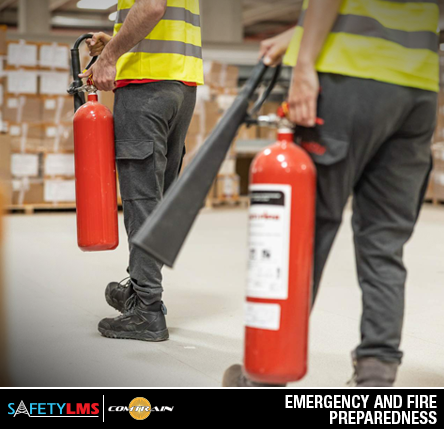
The P.A.S.S. Technique Lab: Interactive visual drills on the proper operation of portable fire extinguishers (Pull, Aim, Squeeze, Sweep) and how to judge if a fire is safe to engage.
-
Evacuation & Egress Mapper: Practical exercises on identifying primary and secondary escape routes, emergency exits, and avoiding dead ends in unfamiliar facilities.
-
Emergency Action Plan (EAP) Blueprint: Detailed walkthroughs of alarm signals, designated muster points, and head-count accountability procedures.
-
Workplace Fire Hazard Audit: Checklists to identify overloaded power strips, blocked emergency doors, compromised fire breaks, and combustible debris.