
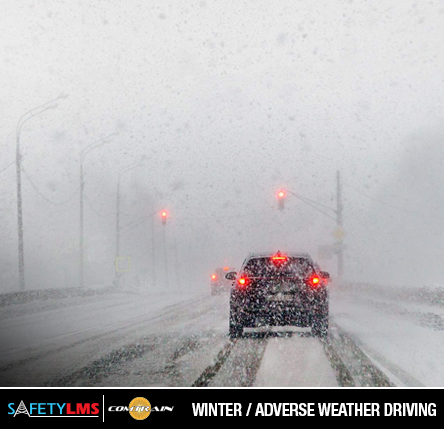
Winter/Adverse Weather Driving
Black ice, blinding snowstorms, and sudden flash floods don't care about your delivery schedule or shift end. Operating a vehicle or heavy equipment in severe weather demands more than just flipping on your windshield wipers—it requires proactive vehicle preparation, total control, and defensive decision-making. This course equips you with the skills to handle reduced traction, navigate low-visibility environments, and make life-saving calls when weather conditions turn dangerous.
By: Safety LMS | Format: Online | Duration: 1.5 hour | Certification: 24 Months | Language: EnglishWhat you'll learn
-
Weather Hazard Identification: Recognize early warning signs of black ice, hydroplaning, high-wind crosswinds, and flash flood risks.
-
Vehicle & Driver Preparedness: Conduct seasonal pre-trip inspections and assemble essential onboard emergency supplies.
-
Speed & Space Management: Calculate safe following distances and adjust speeds based on reduced traction and compromised visibility.
-
Skid Control & Recovery: Master precise steering and braking techniques to regain control during a loss of traction.
-
Navigating Severe Elements: Apply specialized driving tactics for heavy snow, freezing rain, dense fog, and standing water.
-
Emergency Survival Protocols: Execute proper safety steps if your vehicle becomes disabled, stranded, or caught in extreme weather conditions.
Description
Driving in adverse weather is one of the most unpredictable hazards an operator or driver can face. Rain, snow, ice, and fog dramatically alter how a vehicle accelerates, steers, and stops. A single error in judgment on a slick bridge deck or during a sudden downpour can lead to loss of control, severe collisions, or stranded motorists. This course bridges the gap between standard driving habits and advanced defensive techniques required for severe conditions.
We begin with pre-trip readiness. You will learn how cold temperatures impact critical vehicle systems—from tire pressure and battery output to windshield defrosters—and how to ensure your vehicle is mechanically prepared before leaving the facility. The course explores the physics of traction and stopping distances, illustrating how slick surfaces demand vastly increased buffer zones and smooth, deliberate control inputs.
The Golden Rule of Adverse Weather Driving: Look ahead, slow down early, and smooth out every control input. Abrupt steering, hard braking, or sudden acceleration are the primary triggers for a loss of traction on slick roads.
The core of the training focuses on active hazard management and critical situational responses. You will master skid recovery protocols, learning how to stay calm and steer effectively to regain control. We also cover extreme conditions like hydroplaning, high winds, and low visibility, providing clear parameters on when to adapt your driving and when safety requires pulling off the road entirely. By the end of this course, you will have the technical hazard awareness and sound judgment needed to protect yourself, your vehicle, and everyone sharing the road.
Course topics
- Adverse Weather Hazards
- Preparing for the Drive
- Visibility and Weather
- Traction and Braking
- Snow and Ice
- Rain, Flooding, and Wind
- Skids and Loss of Control
- Weather Emergencies
-
The Skid Recovery Simulator: Step-by-step visual drills on how to recognize and recover from front-wheel, rear-wheel, and four-wheel skids without panicking.
-
Winter Pre-Trip Inspection Kit: A comprehensive checklist for verifying battery health, tire tread depth, fluid levels, and emergency kit readiness before heading into severe weather.
-
Traction & Stopping Distance Matrix: Models demonstrating how snow, black ice, and standing water exponentially increase your vehicle's stopping distance.
-
Severe Weather Decision Tree: A practical guide to help drivers evaluate road conditions and confidently determine when it is necessary to pull over or hold back.