
Compressed Gas Cylinder Safety
Compressed gas cylinders store immense potential energy and chemical hazards in a single vessel, demanding strict operational discipline. This course gives employees the practical knowledge required to safely identify, store, move, connect, and operate gas cylinders across diverse industrial environments.
By: Safety LMS | Format: Online | Duration: 1 hour | Certification: 24 Months | Language: EnglishWhat you'll learn
-
Gas Hazard Classifications: Distinguish between flammable, inert, toxic, oxidizing, and corrosive compressed gases.
-
Pre-Use Inspection Rigor: Identify physical damage, corrosion, neck-ring defects, and expired hydrostatic test dates before connecting equipment.
-
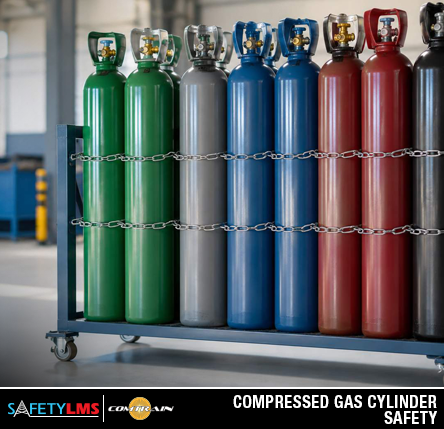
Proper Securing & Handling: Master approved methods for chaining, carting, and securing cylinders to prevent tipping and valve shear.
-
Valve & Regulator Operation: Safely crack valves, attach matching regulators, and execute proper shutdown procedures.
-
Leak Detection Techniques: Apply bubble-test methods and sensor checks to spot leaks at connections, stems, and relief devices.
-
Crisis Response: Take decisive action during gas releases, equipment fires, or compromised cylinder integrity.
Description
A compressed gas cylinder is both a chemical storage unit and a high-energy pressure vessel. A damaged cylinder or a sheared valve can instantly turn a standard tank into a dangerous, unguided projectile. Managing these cylinders safely requires a disciplined approach across every stage of their lifecycle, from the loading dock to the work floor. This training provides workers with a clear safety framework for handling high-pressure gases without putting the jobsite at risk.
We begin by breaking down cylinder anatomy, GHS labeling, and the physical hazards associated with different gas classes. You will learn the strict rules governing storage, including the mandatory 20-foot distance buffer—or 5-foot, half-hour fire barrier—required between flammable gases and oxidizers. The course focuses heavily on daily handling, emphasizing why cylinders must always be secured upright and moved on approved carts with protective caps firmly in place.
The Golden Rule: Never force a connection or use oil and grease on oxygen regulators. Correct thread matching and clean fittings are critical to preventing high-pressure fires and explosions.
Finally, we tackle daily operational checks and emergency preparedness. You will learn proper valve-opening techniques, how to safely test connections for leaks, and when to attempt valve isolation versus executing an immediate evacuation. By the end of this course, you will have the technical hazard awareness and confidence needed to maintain a safe, compliant workplace around compressed gas systems.
Course topics
- Compressed Gas Cylinder Basics
- Gas Types and Cylinder Hazards
- Cylinder Identification and Inspection
- Safe Storage and Separation
- Moving and Handling Cylinders
- Regulators, Valves, and Connections
- Safe Cylinder Use
- Leaks, Emergencies, and Incident Response
-
Cylinder Identification Matrix: Practice reading shoulder stamps, color codes, and GHS labels to correctly verify gas contents before use.
-
Storage & Separation Guide: Visual blueprints for maintaining required distance buffers between incompatible gases, such as oxygen and fuel cylinders.
-
Regulator & Valve Checklist: Interactive walkthroughs for inspecting threads, diaphragms, and valves to prevent high-pressure leaks and cross-threading.
-
Emergency Release Protocols: Scenario-based training on detecting, isolating, and evacuating during uncontrolled leaks or cylinder fires.