
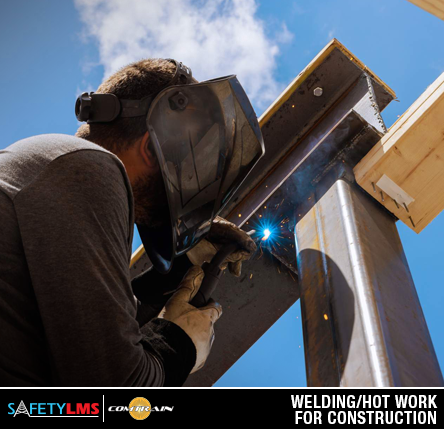
Welding/Hot Work for Construction
Hot work—whether welding, torch cutting, brazing, or grinding—brings intense heat, flying sparks, and extreme hazards to the jobsite. A single stray spark falling near unseen combustibles can turn a routine task into a catastrophic structural fire. This course equips construction workers with the critical hazard recognition, permit protocols, and practical safety controls needed to execute hot work safely and prevent fires, explosions, and severe injuries.
By: Safety LMS | Format: Online | Duration: 2 hours | Certification: 24 Months | Language: EnglishWhat you'll learn
-
Hazard Identification: Recognize ignition sources, flammable materials, toxic fumes, and how heat, sparks, and slag travel through jobsite openings.
-
Permits & Worksite Prep: Master hot work planning, permit compliance, and proper site preparation steps before work begins.
-
Fire Watch Responsibilities: Understand the vital duties of a fire watch, including monitoring during the job and maintaining post-work vigil.
-
Equipment & Cylinder Safety: Apply safe handling, storage, and operation practices for welding gear and high-pressure compressed gas cylinders.
-
Health & PPE Defense: Select and use proper eye, face, skin, and respiratory protection against UV radiation, burns, and heavy metal fumes.
-
Stop Work & Crisis Action: Exercise Stop Work Authority when conditions change and execute effective emergency response protocols.
Description
A single spark generated during torch cutting or grinding can burn at temperatures exceeding 1,000 F (538 C) and travel tens of feet, easily reaching hidden combustibles in walls, floor penetrations, or lower levels. Because hot work is one of the leading causes of major construction fires, these tasks require strict operational discipline, thorough pre-job planning, and continuous hazard controls.
This course walks you through the entire lifecycle of a hot work project—from initial risk assessment and permit verification to post-work monitoring. You will explore how hot work hazards develop and learn how to implement engineering and administrative controls to mitigate fire, explosion, and toxic exposure risks. We dive deep into equipment safety, teaching you how to inspect welding units and safely handle, store, and secure compressed gas cylinders to prevent catastrophic pressure releases or backfires.
The Golden Rule of Hot Work: Fire prevention doesn't end when the torch turns off. Continuous monitoring by a dedicated Fire Watch during and after the task is often the only line of defense against a delayed-ignition fire.
Beyond fire prevention, the training addresses severe health hazards, including toxic metal fumes (such as hexavalent chromium or zinc fumes), arc eye, and oxygen displacement in specialized construction areas. You will learn to verify safe atmospheric conditions, select appropriate PPE, and boldly exercise your Stop Work Authority if environmental conditions shift or safety parameters are breached. By the end of this course, you will have the technical knowledge and hazard awareness required to perform hot work safely, protecting both your team and the jobsite.
Course topics
- Hot Work Hazard Awareness
- How Hot Work Hazards Develop
- Fire and Explosion Hazards
- Hot Work Planning and Permits
- Preparing the Work Area
- Fire Watch and Fire Prevention
- Equipment and Cylinder Safety
- Health Hazards from Hot Work
- PPE for Welding and Hot Work
- Worker Responsibilities and Stop Work
-
Hot Work Permit Navigator: An interactive guide on evaluating, completing, and enforcing hot work permits before striking an arc or lighting a torch.
-
The 35-Foot Rule Visualizer: Spatial breakdowns showing how far sparks and slag travel, and how to properly clear and shield the surrounding area.
-
Gas Cylinder Safety Audit: Step-by-step visual inspections covering regulators, hoses, check valves, and storage protocols for compressed oxygen and fuel gases.
-
Fire Watch Duty Playbook: Detailed guidance on monitoring hot work zones, executing post-job cooldown checks, and taking immediate action upon ignition.